How to protect plants from frost: covers, water, and pots
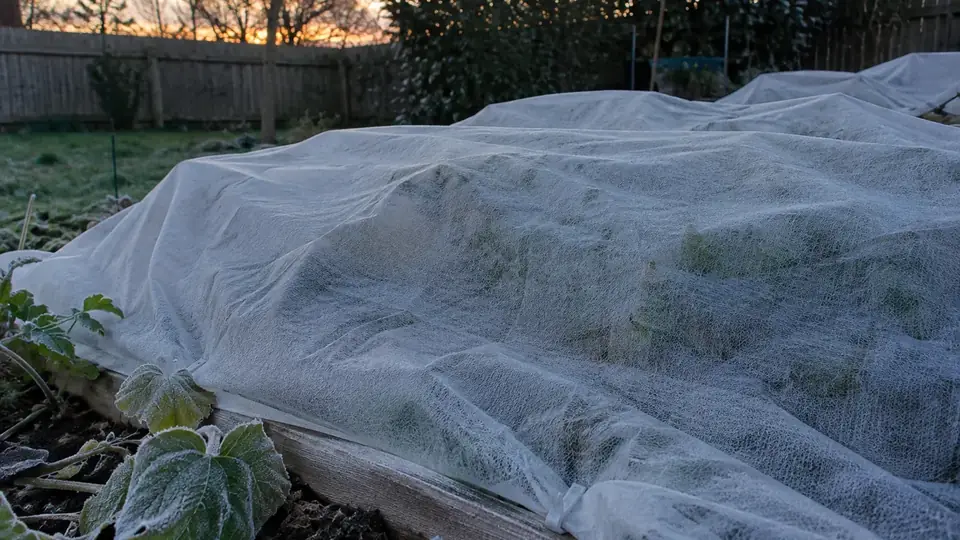
On a still, clear night, the extensions cited here say to cover plants so heat from the soil stays around them, to water the soil ahead of time because moist ground holds that heat, and to move pots somewhere the root ball is not sitting in the open. The temperatures that decide whether that is a frost night or a killing freeze come from the National Weather Service, not from a city's median frost date.
A city page on this site is a 1991 to 2020 median. It is not a forecast for tonight and not a guarantee for this year. Nothing here is agricultural advice. The extension pages outrank this summary where they disagree with it.
Which temperature the night actually is
The NWS glossary, checked 21 Nov 2026, describes frost as thin ice crystals on the ground or on plants. It forms the way dew does, except the surface falls below 32°F, and it often shows up with the thermometer still in the middle 30s, because the cooling is mostly radiation to a clear sky. A frost advisory, on that page, is for widespread frost in the growing season, usually with surface temperatures in the middle 30s.
A freeze, same glossary, is surface air at 32°F or below over a wide area for a climatologically significant time. A hard freeze is 28°F or lower for an extended period, which the glossary says kills most vegetation. The NWS cold weather page uses those lines for action: a freeze warning when the forecast goes below 32°F for a long period (some crops and garden plants die), and temperatures below 28°F for an extended period can kill most of them. A frost advisory means areas of frost are expected or occurring, and sensitive plants are at risk.
Texas A&M AgriLife Extension, HORT-PU-068 (Monte Nesbitt and Robert "Skip" Richter, original publish date April 2014, page checked 21 Nov 2026) splits the same weather into a radiative frost and an advective freeze. On a radiative night, clear and nearly calm, it says leaves exposed to the sky can run as much as 5 degrees colder than the air temperature, which is why a plant can show frost injury when the recorded air never reached 32°F. In a windy advective freeze, the same publication says the lightweight covers that work on a frost give little or no protection by themselves.
A worked example: Birmingham's three medians
At Birmingham the NOAA 50 percent spring dates are April 3 at 36°F, March 21 at 32°F, and March 7 at 28°F. The 10 percent date at 32°F is April 8, 18 days after the median. Those are medians at Birmingham AP, not a warning. Alabama Cooperative Extension (Shane Harris, posted 21 April 2021, checked 21 Nov 2026) says warm season vegetables, including tomatoes, peppers, squash, corn, and okra, can start to show leaf damage at 33°F. Some cool season crops, it says, can take 26 to 31°F for a limited time. After fruit has set, the same page says research it cites found that 10 percent of the fruit is killed at 28°F. It does not name that study.
Read that against the three Birmingham columns, not as a single "last frost." A 33°F leaf-damage line sits nearer the 36°F median (April 3) than the 32°F headline (March 21). The 28°F fruit figure lines up with the hard freeze definition, and at this station that median is March 7. Mobile's median last 32°F freeze is February 21. Huntsville's is March 24. Denver's is May 4. The cover and the watering step do not move when the city changes. The night you are planning for does. The Alabama page is the five city spread. Sources and methods is how a station was chosen.
Related pages
Which Frost site mark. Image policy
Birmingham frost datesWorked example: median spring dates of April 3 at 36°F, March 21 at 32°F, and March 7 at 28°F.Which Frost site mark. Image policy
Alabama frost datesFive cities. The median last 32°F freeze runs from February 21 to March 24.Which Frost site mark. Image policy
USDA zone 8aA winter band, not a frost date. Birmingham and Huntsville share the zone and not the date.Which Frost site mark. Image policy
Sources and methodsWhich station a city page uses, and why the 1991 to 2020 normals were not replaced.
Covers: cloth to the ground, off in the morning
Alabama Extension says a loose lightweight cloth, such as a bed sheet, can add 3 to 5 degrees to the air around the plant, and that the point is to trap heat from the ground, not heat from the plant. Cloth, it says, works better than plastic, because plastic transfers more heat, and foliage may freeze where it touches the plastic. Weigh the cover down, leave no gap for heat to leak, and take it off each morning as temperatures rise. Sun on a covered plant, that page says, can heat new growth. For a small tomato or pepper it also names a bucket, newspaper, or a gallon milk carton. In an extreme case it says a new transplant can be dug, brought inside, and replanted after the night.
Texas A&M describes the same idea for a radiative frost, with a timing detail the Alabama page does not: put the cover on late in the afternoon or in the evening, before sundown, so the soil and the plant have taken on the day's radiation. Drape it loosely, or stake it out like a tent. Do not tie it tight around the trunk. That publication says a tight tie blocks the ground radiation the cover is there to catch. Heavier frost blankets protect more than light ones, and it says to consider two layers on a severe frost. Clear plastic, it says, cools fast by radiation and can injure tissue at the point of contact. Cardboard boxes and large cans are named as other covers.
UC Master Gardeners of Sacramento County (Caroline Hathaway and Cathy Coulter, November 2008, page checked 21 Nov 2026) agree on covering before sunset and on taking sheets and blankets off daily when the day is sunny and above freezing. They differ on frost cloth: weights that can give 4 to 8 degrees of protection, cloth that can lie on the foliage, and cloth that can stay on for a few days because some light and air pass through. That is not the Alabama instruction for a bed sheet. If the fabric is frost cloth, the UC page is the one that says it may stay. If it is a sheet or a blanket, both pages say it comes off.
Water the soil. Do not confuse that with sprinkling the leaves
All three pages tell a gardener to have the plants watered before the night. Alabama Extension: plants short of water are more vulnerable, and wet soil holds heat longer and lets it go slowly during the frost. Texas A&M: water the ground liberally the day before, because wet soil and puddles take in radiation by day and release it at night, and because water gives off heat as it freezes. A dry, stressed plant, it says, resists freezing less well. UC: dry plants are more susceptible, and moist soil retains heat better than dry soil. UC also says to rake mulch away before a frost night so the bare soil can warm by day and radiate at night. That is a frost night instruction. It is not the winter mulch Texas A&M describes for a perennial crown after the top has died back.
Sprinkling foliage is a different tool, and Texas A&M spends most of a section warning about it. Ice, that publication says, is a poor insulator. The heat comes from water as it freezes, so the water has to keep coming. Too little, or stopping during the night, can do more harm than not sprinkling, and wind over wet ice can cool the tissue further by evaporation. The rates it prints (for strawberries, grapes, and citrus) are commercial volumes, and it says the ice load can flatten a garden and break limbs. This page does not turn those rates into a home hose setting. The home step the publication actually pairs with covers is watering the soil, plus a jug of water under the cover for a small transplant, because water cools more slowly than air.
Pots cool faster than plants in the ground
Texas A&M's container section says roots in a pot lack the earth's insulation and are often less hardy than the top of the plant. They may die, it says, if the pot drops much below 32°F. The move it names is into a garage or other protected place. The next option is to group the pots on a protected side of the house, water them, pile mulch or leaves among them, and cover the group. UC says to move potted plants to a warmer spot next to the house or under a patio cover, especially the south side. Alabama's frost page is about small plants under a bucket or carton more than about a large pot, and its extreme case is digging a new transplant and bringing it in.
None of the three says a cover, a watering, or a move indoors will save every plant. Texas A&M says even a careful combination can fail in a severe event, particularly if the plant is in a tender stage, and that pruning right after a freeze does not improve the outcome. Wait, it says, until you can see what is alive. UC says the same about waiting to prune until the frost risk has passed and new growth starts.
Related pages
Which Frost site mark. Image policy
Mobile frost datesAn earlier median, February 21, on the Alabama coast.Which Frost site mark. Image policy
Huntsville frost datesA later median, March 24, in the north of the state.Which Frost site mark. Image policy
Denver frost datesA colder median on this site: last 32°F freeze on May 4.Which Frost site mark. Image policy
Frost dates by statePick a state, then a city, before you treat one median as yours.
Frequently asked questions
Does a bed sheet over a plant replace a freeze warning?
No. A cover is what extension pages describe for a frost night, to slow heat leaving the ground. A freeze warning is a forecast that air will stay at or below 32°F for a long time. Texas A&M writes that the light covers which help on a still, clear frost do little in a windy hard freeze. The dates on a city page are 1991 to 2020 medians, not tonight's warning.
Should I sprinkle the leaves all night?
Texas A&M's freeze publication says ice on a leaf is a poor insulator, and that too little water, or stopping partway through the night, can injure plants more than leaving them dry. The watering step the same publication, Alabama Extension, and UC Master Gardeners describe for a home garden is watering the soil ahead of the night, because moist soil holds more heat than dry soil. That is not a recommendation to run a hose on the foliage.
When do the covers come off?
Alabama Extension says to take the cover off each morning as temperatures rise, because sun on a covered plant can heat new growth. UC Master Gardeners of Sacramento County say to remove sheets and blankets daily when it is sunny and above freezing, and that frost cloth, which lets some light and air through, can stay on for a few days. The two pages are not the same instruction. Read the one that matches the cloth you used.
Sources
- NWS glossary: frost and frost advisory, checked 21 Nov 2026
- NWS glossary: freeze and hard freeze, checked 21 Nov 2026
- NWS: freeze warning and frost advisory, checked 21 Nov 2026
- Alabama Cooperative Extension, Protecting Plants During Frost Advisories, Shane Harris, 21 April 2021, checked 21 Nov 2026
- Texas A&M AgriLife Extension HORT-PU-068, Protecting Landscapes and Horticultural Crops from Frosts and Freezes, April 2014, checked 21 Nov 2026
- UC Master Gardeners of Sacramento County, Frost and Protection for Sensitive Plants, November 2008, checked 21 Nov 2026
- NOAA NCEI U.S. Climate Normals 1991 to 2020, product page checked 21 Nov 2026
Birmingham, Mobile, Huntsville, and Denver dates are the station cache retrieved 16 Nov 2026 (NCEI v1.0.1, file dated 20230404). On 21 Nov 2026 NCEI still called that normals set the latest. The dates were not replaced.